
TAG Founder Dr. Park Dietz Featured in Fox News Analysis of Trump Assassination Attempts
TAG founder Dr. Park Dietz on the Cole Allen case: "There is a fame-seeking portion of this. But grievance is the primary motivation."
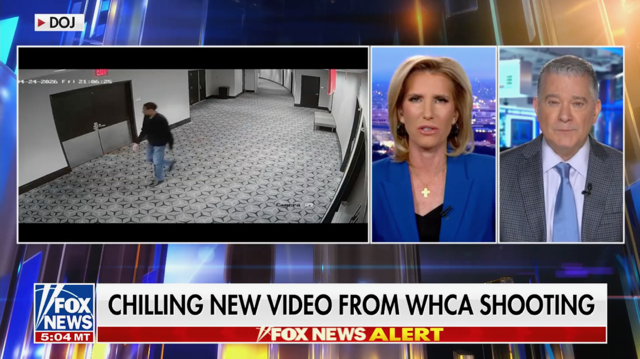
Credit: Fox News, May 1st, 2026 8:00AM PDT
In a matter of days, authorities have revealed a trove of information about Cole Allen after he allegedly tried to assassinate President Donald Trump, while the public has learned little about Thomas Crooks nearly two years after his assassination attempt.
The contrast raises new questions about transparency and what remains unknown about Crooks' shooting of Trump, and experts say the explanation may be simpler than it seems.
In the latest case, investigators quickly developed a clearer picture of the suspect’s apparent grievances, communications and alleged planning. But in the Crooks case, key questions about motive and mindset have lingered long after the shooting, fueling speculation about what investigators know and why the public still knows so little.
Experts who study assassination attempts and targeted violence say the difference often comes down to evidence.
Sometimes, they say, one offender simply leaves behind far more information than another.
Allen, a 31-year-old California computer scientist, is accused of opening fire at the White House Correspondents’ Association Dinner on Saturday, April 25, after allegedly rushing a Secret Service checkpoint armed with multiple weapons. He now faces federal charges, with more expected.
By contrast, Crooks, who carried out the 2024 assassination attempt against Trump at a rally in Butler, Pennsylvania, was shot and killed at the scene, limiting the scope of the investigation and what information became public.
"There really just isn’t always an answer. There isn’t always a clear motive," Nicole Parker, former FBI special agent, Fox News contributor and author of "The Two FBIs," told Fox News Digital.
Parker said in some cases, investigators are left with very little to work from, especially when a suspect has few connections or leaves behind a limited digital footprint.
"I don’t believe the FBI is hiding anything," Parker said. "There’s probably just not as much evidence in that case to point investigators in a clear direction."
At the same time, Parker said more information is emerging quickly in the Allen case, in part due to a broader push for transparency.
"The Trump administration is focused on getting facts out quickly to avoid conspiracy theories," she said, noting officials are releasing information "to the extent possible without compromising the investigation."
"Every case is different," the FBI said in a statement to Fox News Digital. "When a prosecution is pending, the FBI works closely with prosecutors on what can be released without interfering with the trial process. The FBI and the Department of Justice, along with our local partners, have had multiple press briefings since Saturday’s shooting. Because this is an ongoing investigation as well as ongoing legal process, the FBI cannot comment further at this time."
Forensic psychiatrist Park Dietz, an expert on criminal behavior, said the difference between the two cases often starts with the suspect.
Dietz, president of Park Dietz & Associates and founder of the Threat Assessment Group, has worked on some of the nation’s most high-profile criminal cases, including those involving Reagan shooter John Hinckley Jr., serial killer Jeffrey Dahmer and the Unabomber.
In Allen’s case, Dietz said, the suspect appears to have left investigators with far more to analyze.
"Allen left a bigger trail," Dietz said. "He had contact with more people. He wrote a lot online. And he, of course, sent this missive at the last moment explaining his actions."
Dietz said that kind of trail, communications, writings and personal contacts can accelerate how quickly investigators and the public understand a suspect’s mindset.
"Some of this is determined by the offender," Dietz said. "How public are they going to be about their motives and nature of their grievances?"
Dietz said early indicators point to a familiar pattern seen in these types of cases.
"It’s very clear that this is primarily a grievance," he said. "The fact that he wrote to his family, justifying his actions and explaining why he was taking them indicates that he’s aware that this is going to become public information, that it will be a historical document."
"So there is a fame-seeking portion of this," Dietz added. "But grievance is the primary motivation."
This article was originally published by Stephany Price on Fox News Digital. Click here to read more